


Menu

Prepare for an entry-level healthcare career, earn an industry-recognized credential, or build on skills you already use in the workplace. Blue Ridge Community College offers workforce continuing education courses in patient care, clinical support, medical administration, pharmacy services, and more. 

Workforce Training for Healthcare Careers

Allied Health courses are continuing education programs designed to prepare students for specific healthcare roles, certification examinations, registry eligibility, or advancement in an existing career. These courses are separate from Blue Ridge degree and diploma programs.

Course length, eligibility requirements, clinical experiences, and documentation requirements vary. Review the information for your course carefully before registering. 

Looking for a degree or diploma? Explore healthcare programs →

Find the Right Training Option

Choose the course that best matches your experience and career goals. Select a course name to jump to its description, eligibility requirements, and registration options.

CourseDesigned forImportant eligibility notes
Behavioral Health TechnicianStudents preparing for entry-level behavioral or mental health support rolesClinical and health document requirements apply
Central Sterile ProcessingStudents interested in sterilization, instrument preparation, and supply distributionCertification requires hands-on experience in a sterile processing department
EKG Technician/MonitorStudents interested in cardiac monitoring and EKG testingMinimum age and education requirements apply
Healthcare Billing and CodingStudents interested in healthcare claims, coding, billing, and reimbursementMinimum age and education requirements apply
Healthcare Customer Service Representative (HCSR)Students preparing for front-office healthcare roles involving patient service and medical office operationsHybrid course with online coursework and scheduled in-person instruction
Medical Assistant Entry Level with ClinicalStudents beginning a medical assisting careerIncludes clinical rotations and health-document requirements
Medical Assistant Prep/ReviewExperienced medical assistants preparing for certificationCurrent or recent medical assistant work experience required
Medication AideCurrent Nurse Aides seeking medication-administration trainingCurrent listing on the Nurse Aide Registry required
Nurse Aide IStudents beginning direct patient-care trainingMinimum age and clinical health requirements apply
Nurse Aide IICurrent Nurse Aide I professionals seeking advanced skillsCurrent Nurse Aide Registry listing required
Nurse Aide I RefresherPreviously trained or credentialed healthcare workers returning to Nurse Aide practicePrior registry listing, qualifying credential, or equivalent training required
Pharmacy TechnicianStudents interested in pharmacy services and medication dispensing supportMinimum age and education requirements apply
PhlebotomyStudents preparing to collect and process blood specimensClinical and health-document requirements apply
Phlebotomy Technician RefresherHealthcare workers who already perform blood collectionEmployer verification of qualifying work experience required

Advance Your Healthcare Career

Explore workforce continuing education courses designed to prepare you for entry-level roles in behavioral health, clinical support, medical administration, pharmacy services, and other healthcare settings. 

Learn the foundational skills needed to support people receiving behavioral and mental health services. Course topics include person-centered care, essential healthcare skills, mental health diagnoses, whole-person care, therapeutic relationships, and clinical experience. 

After successfully completing the course, students are eligible to take the American Association of Psychiatric Technicians Level 1 certification exam.

Before registering: Students must meet the course’s age, education, identification, clinical, and health-documentation requirements. Review the course handbook for complete requirements and submission deadlines.

Medical Technician in uniform with stethoscope talks to young man

Prepare to support patient care by ensuring that medical instruments and equipment are properly prepared, sterilized, stored, and distributed. Course topics include sterilization and disinfection procedures, infection prevention, inventory management, quality assurance, and the distribution of medical supplies and equipment. 

Students pursuing certification must also complete the required hands-on experience in a sterile processing department. This experience may be completed before or after the certification examination.

Before registering: Review the course handbook for current eligibility, certification, and experience requirements.

Technician putting surgical instruments in autoclave for sterilization

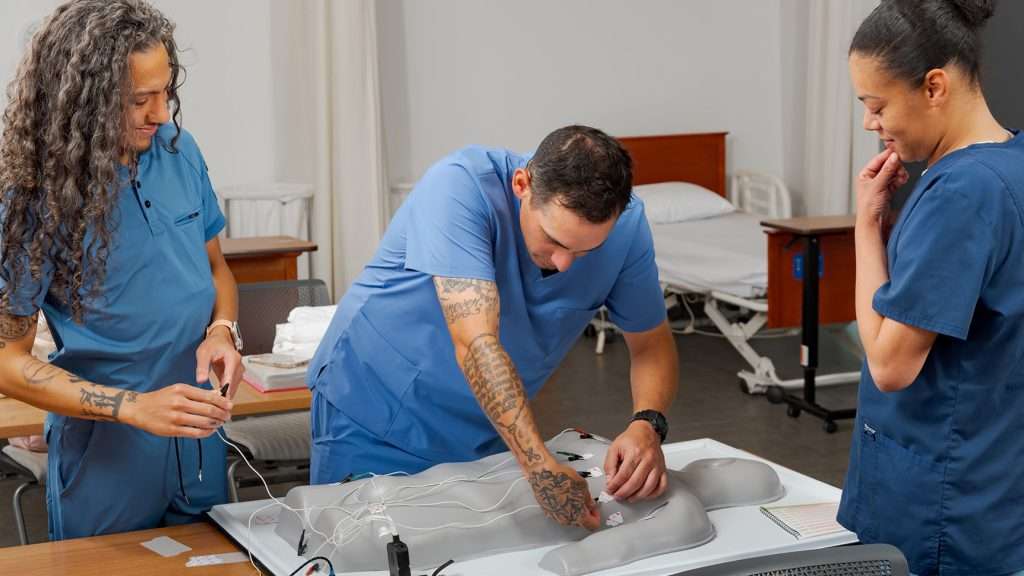
Learn the skills used to perform and interpret basic electrocardiogram procedures. Course topics include the anatomy and physiology of the heart, principles of EKG testing, proper testing procedures, and recognition of cardiac rhythms.

After successfully completing the course, students are eligible to take the National Healthcareer Association (NHA) Certified EKG Technician examination. Blue Ridge Community College is an approved NHA testing site.

Before registering: Students must meet the course’s minimum age, education, and identification requirements. Review the EKG Technician/Monitor Student Handbook for more information.

Male student places EKG sensors on dummy patient.

Prepare for an entry-level position involving healthcare billing, coding, insurance claims, and reimbursement. Course topics include medical terminology, coding regulations, managed healthcare, insurance plans, the life cycle of a claim, legal and regulatory considerations, and commercial claim processing. 

After successfully completing the course, students are eligible to take the applicable National Healthcareer Association (NHA) certification examination. Blue Ridge Community College is an approved NHA testing site. 

Before registering: Students must meet the course’s minimum age, education, and identification requirements. Review the Healthcare Billing and Coding Student Handbook for more information.

Medical worker calculates the cost of treatment

Prepare for a front-office healthcare career focused on patient service, communication, and medical office operations. This 144-hour workforce training course combines online coursework with scheduled face-to-face instruction and hands-on support.

Students will learn healthcare communication, professionalism, customer service, medical terminology, medical law and ethics, HIPAA requirements, insurance verification, billing fundamentals, and revenue-cycle processes. Training also covers healthcare call triage, including gathering information, identifying the purpose and urgency of a call, communicating professionally, and directing patients to the appropriate department, provider, or level of assistance. 

Upon successful completion, students will be prepared to take the National Healthcareer Association Certified Medical Administrative Assistant (CMAA) certification exam.

Asian female doctor medical professional hospital office computer document pen concentration

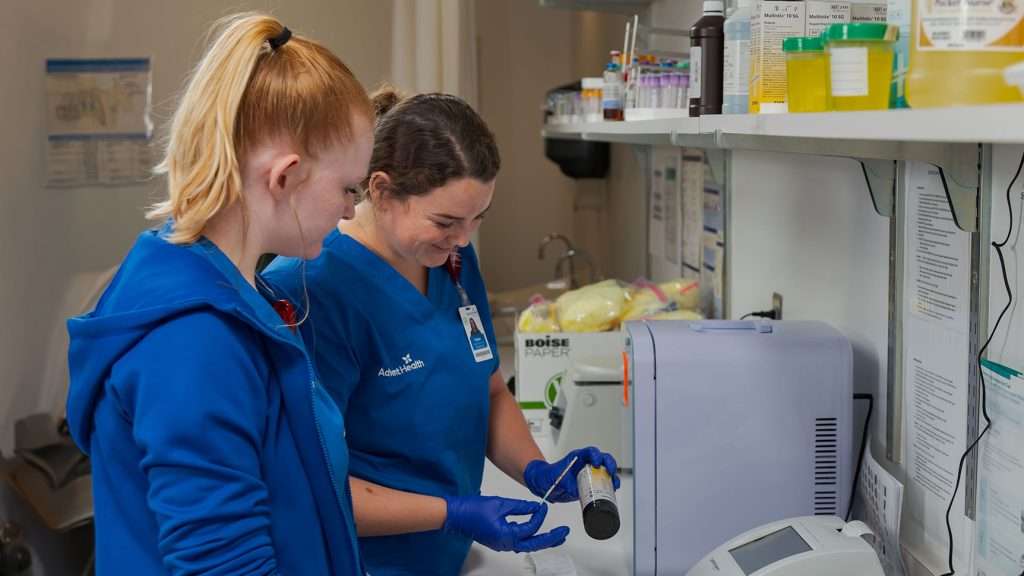
Develop the administrative, clinical, and laboratory skills used by medical assistants. Course topics include scheduling appointments, medical billing and coding, medical transcription, assisting with examinations and treatments, performing routine laboratory procedures, and understanding legal and ethical responsibilities. 

The course includes 40 hours of clinical rotations. After successfully completing the course, students are eligible to take the applicable National Healthcareer Association (NHA) medical assistant certification examination. Blue Ridge Community College is an approved NHA testing site.

Before registering: Students must meet the course’s age, education, identification, immunization, clinical, and health-document requirements. Required health documentation must be submitted by the deadline provided after registration. Review the course handbook for more information.

Healthcare Medical Assistant with Clinical students working in a patient setting

Review the administrative, clinical, and laboratory knowledge needed for the National Healthcareer Association (NHA) Certified Clinical Medical Assistant examination.

This course is intended for people who are currently working as medical assistants or who have qualifying medical assistant experience. It is not an entry-level medical assistant course.

Before registering: Students must have at least one year of qualifying medical assistant work experience and must currently work as a medical assistant or have worked in the role within the previous five years. Review the course handbook for full requirement information.

Healthcare Medical Assistant Prep students working in a lab setting

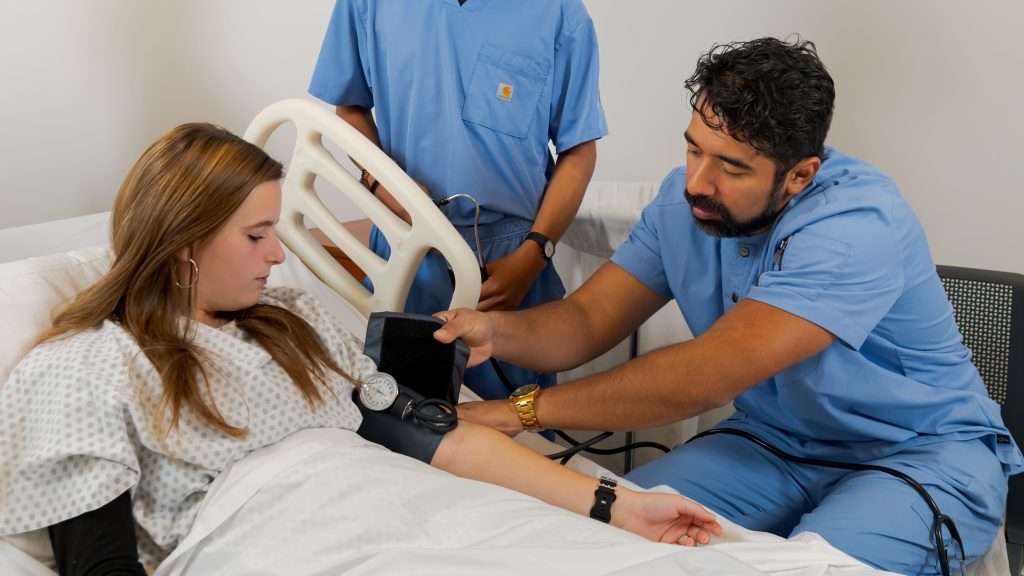
Refresh the knowledge and practical skills needed to complete the North Carolina Nurse Aide competency-testing process. 

This course may be appropriate for people with a previous state Nurse Aide Registry listing, a qualifying healthcare credential, or equivalent military healthcare training. Not every healthcare credential qualifies a student for the refresher course.

Before registering: Review the complete eligibility criteria in the course handbook. Contact the Nurse Aide program before registering if you are unsure whether your previous training or credential qualifies.

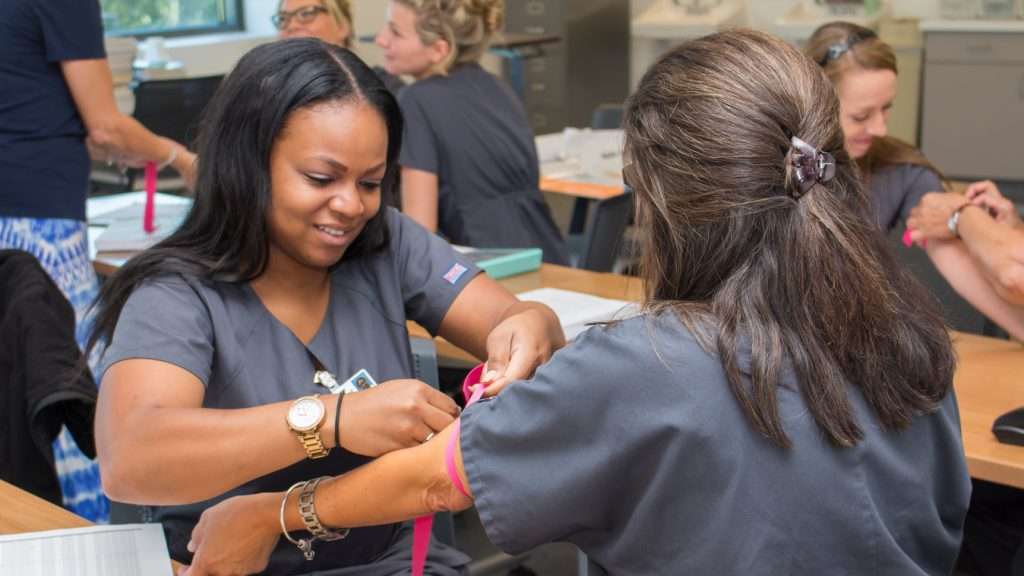
Nurse aide students at Blue Ridge Community College learn proper blood pressure monitoring techniques.

Learn the technical procedures used to prepare and dispense medications under the supervision of a registered pharmacist. Course topics include medication packaging and labeling, hospital and outpatient dispensing, controlled-substance procedures, inventory management, and non-sterile compounding. 

After successfully completing the course, students are eligible to take the National Healthcareer Association (NHA) Certified Pharmacy Technician examination. 

Before registering: Students must be at least 18 years old and have a high school diploma or high school equivalency credential. Review the course handbook for any additional requirements.

pharmacy technician student in scrubs works with instructor

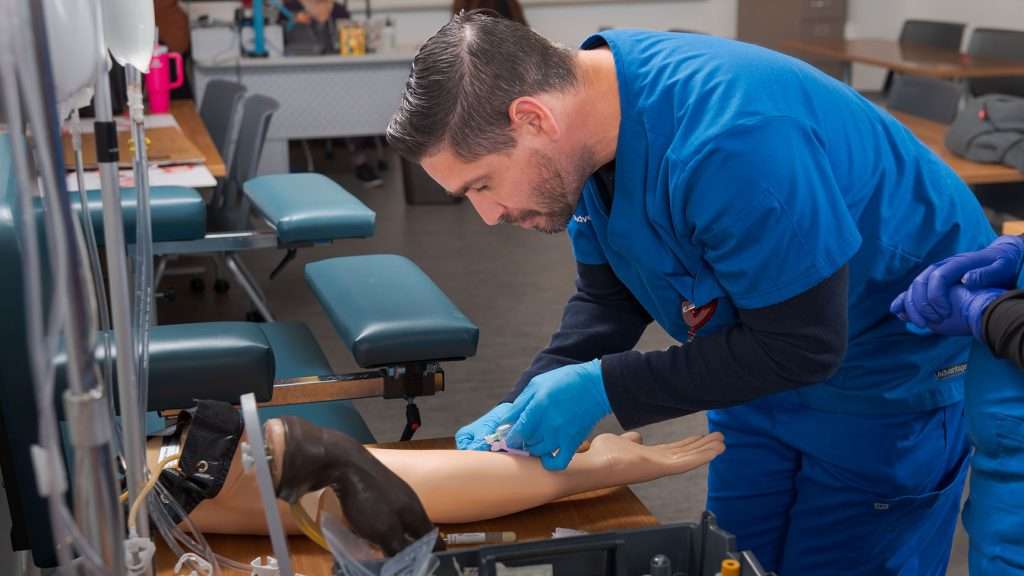
Learn the procedures used to obtain, label, handle, and transport blood specimens for testing. Students develop practical blood-collection skills while learning appropriate patient-care, safety, and infection-prevention procedures. 

After successfully completing the course, students are eligible to take the applicable National Healthcareer Association (NHA) phlebotomy certification examination. Blue Ridge Community College is an approved NHA testing site. 

Before registering: Students must meet the course’s age, education, identification, immunization, clinical, and health-document requirements. Review the course handbook for more information.

Phlebotomy students practice learning preparation to draw blood

Review blood-collection, specimen-labeling, handling, and transportation procedures in preparation for the National Healthcareer Association (NHA) phlebotomy certification examination. 

This course is intended for healthcare workers who already perform qualifying blood-collection duties. It is not an entry-level phlebotomy course.

Before registering: Students must provide employer verification of qualifying work experience, including the required number of successful venipunctures and dermal collections.

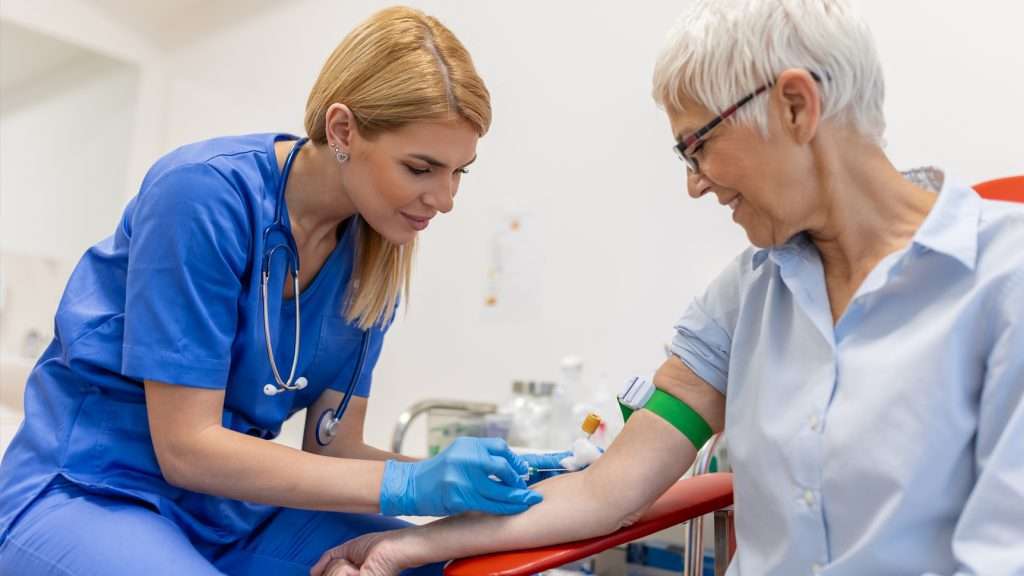
A phlebotomist draws blood from an older patient

Build Patient Care Skills

Prepare to provide direct patient care or advance through the Nurse Aide and Medication Aide training pathways. These courses have different registry, clinical, and documentation requirements, so review the information for your selected course before registering.

Learn the foundational nursing skills needed to provide personal care for patients, residents, and clients in healthcare settings. Course topics include communication, safety, patient rights, personal care, vital signs, nutrition, emergencies, rehabilitation, and mental health. 

After completing the course and applicable state requirements, students may qualify for listing on the North Carolina Nurse Aide I Registry.

Before registering: Students must be at least 16 ½ years old by the first day of class. Immunization, identification, clinical, and health-document requirements also apply. Review the course handbook for complete information.

Healthcare Nurse Aide students working in a patient setting

Build advanced patient-care skills used by Nurse Aide II professionals. Training includes sterile technique, urinary catheterization, wound care, respiratory procedures, ostomy care, peripheral IV assistance, alternative feeding methods, and other approved Nurse Aide II tasks.

After completing the course and applicable state requirements, students may qualify for listing on the North Carolina Nurse Aide II Registry.

Before registering: Students must have a current listing on the North Carolina Nurse Aide I Registry. Identification, immunization, clinical, and health-documentation requirements also apply. Review the course handbook for more information.

Healthcare Nurse Aide students working in a patient setting

Learn the principles and procedures used by non-licensed personnel to administer medications safely. Course topics include the six rights of medication administration, oral and topical medications, medical asepsis, hand hygiene, medication terminology, and legal responsibilities. 

After completing the course and applicable state requirements, students may qualify for listing on the North Carolina Medication Aide Registry.

Before registering: Students must have a current listing on the North Carolina Nurse Aide Registry. Additional education and identification requirements may apply. Review the course handbook for more information.

A student locates an item in a drawer of medications while another student looks on.

Register for Allied Health Workforce Training

Registration requirements vary by course. Before registering, review the course information and handbook, confirm that you meet the eligibility requirements, and check the registration system for current offerings.

  1. Review the Requirements and Course Handbook

    Confirm that you meet the course's age, education, credential, or work-experience requirements. Review the course handbook for important information about required documents, attendance, clinical participation, deadlines, and course policies.

  2. Check Current Course Availability

    Use the course-specific registration link to view currently available dates, locations, costs, and registration status. Course schedules vary, and not every Allied Health course is offered during every registration period.

  3. Register and Pay

    Select an available course section and complete the online registration process. Review your registration information carefully and pay all required course fees according to the instructions provided.

  4. Complete Additional Requirements

    After registering, review all emails and instructions you receive from the Allied Health team. If your course includes clinical participation, submit the required health and clinical documentation by the stated deadline.

Don't See Your Course Listed?

Course availability changes throughout the year, and not every Allied Health course is open for registration at all times. If your course does not appear in the registration system, it may not have a current section available. 

Contact the Allied Health team to ask about future offerings or let us know that you are interested in the course.

Clinical and Health Documentation

Some Allied Health courses require clinical participation and the submission of immunization or other health records through Viewpoint Screening. Requirements vary by course, so review your course handbook and follow the instructions you receive after registering. 

Review the written instructions and video guides for help creating your Health Portal account and uploading required documentation.

If you need further assistance with this process, please reach out to our Clinical Coordinator, Allison Yingst, at (828) 694-4731 or a_yingst@blueridge.edu.

Follow this video guide to create and set up your Viewpoint Health Portal account.

Follow this video guide to upload immunization records and other required health documents.

Help Paying for Your Course

Some continuing education courses may qualify for scholarship or workforce funding. Eligibility varies by course and student. Contact the NCWorks Career Center at (828) 694-1755 to discuss what assistance may be available before registering. 

Technical Standards

Students enrolling in these programs must meet specific emotional, behavioral, physical, and cognitive standards. This information is found in Technical Standards. Students qualifying for special accommodations to these standards must contact Student Accessibility Services at (828) 694-1813 or access@blueridge.edu for more information.

Questions About Allied Health Training?

Not sure which course fits your goals, whether you meet the requirements, or what to do after registering? The Allied Health team can help you understand your options and next steps. 

Allied Health Programs
Kimberli Clark, B.S., RMA (AMT)
Program Director, Allied Health
(828) 694-1647
k.clark1@blueridge.edu

Registration Assistance
Sheila Merrill
Allied Health Program Specialist and Registration
(828) 694-1748
sl_merrill@blueridge.edu

2026-27 Identity/Statement of Educational Purpose (V4)

Beginning the 2026-27 academic year, all “Identity/Statement of Educational Purpose” forms must be completed in the Offices of Financial Aid.